UNLP Registry
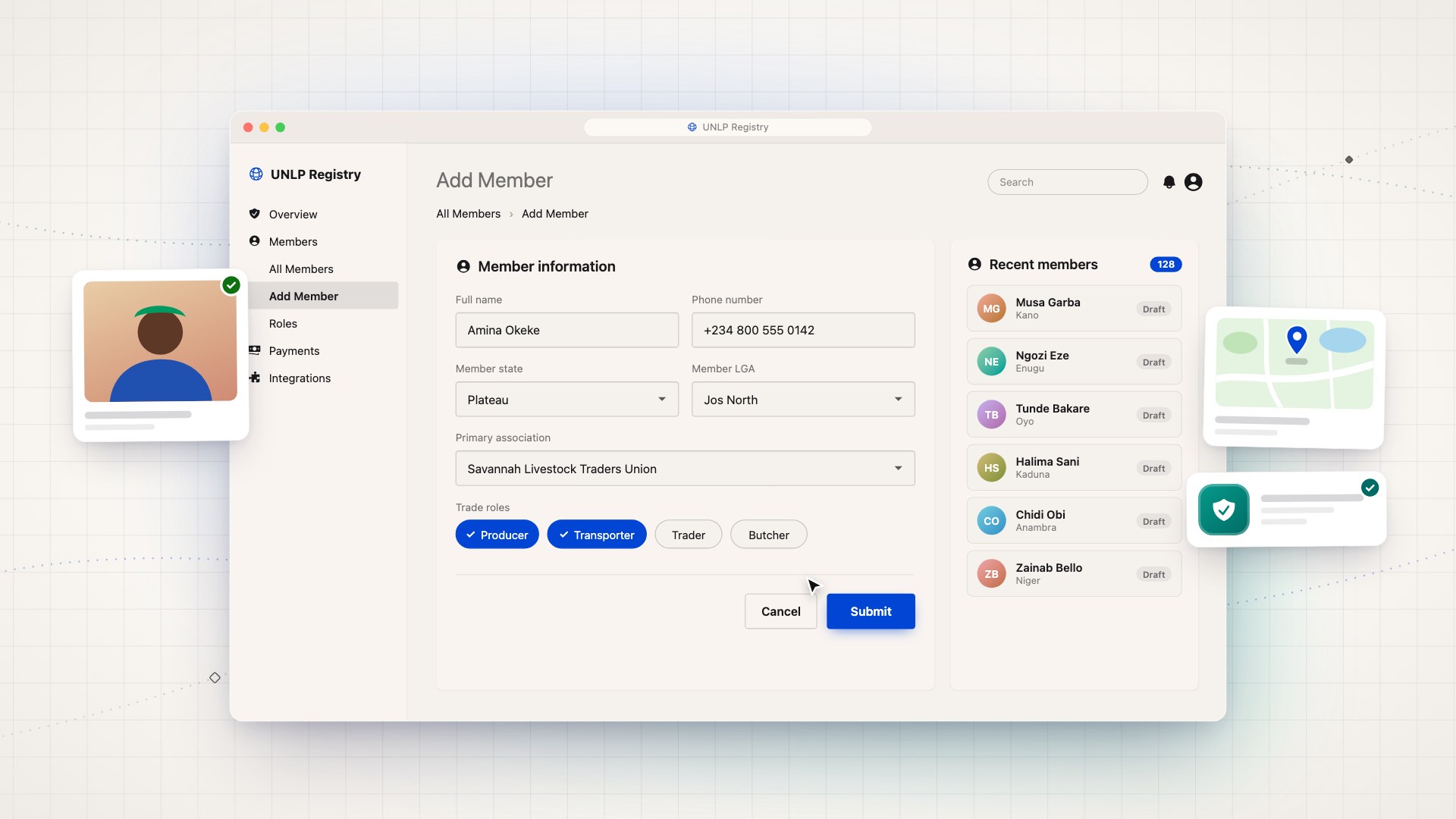
Start with
the person.
Record a member’s name, contact details, location, association and trade roles together.
Registration brings the information into one record. Evidence and verification remain separate steps.
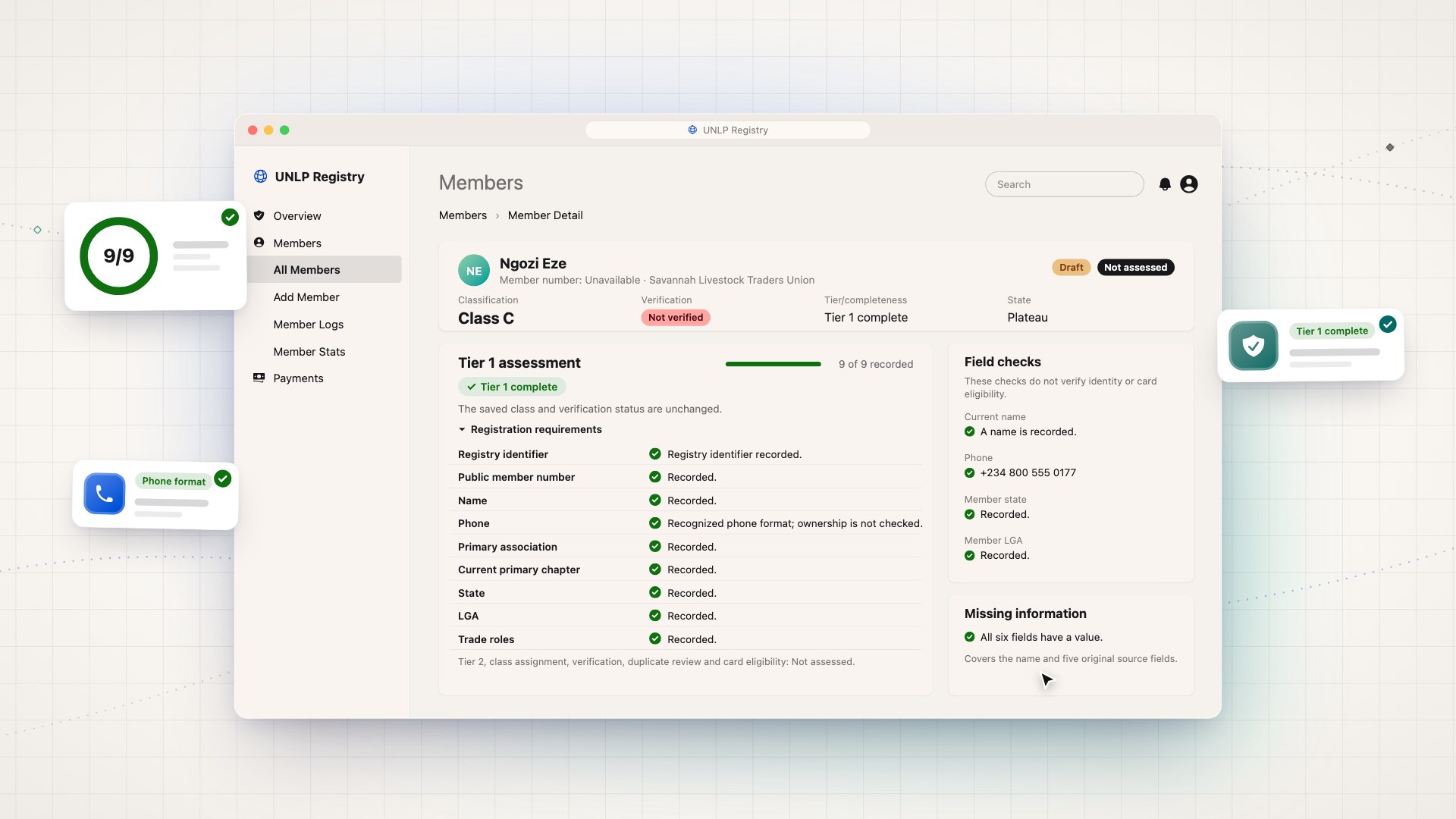
See what’s
missing.
Review recorded fields, complete the missing LGA and follow the Tier 1 assessment.
Completeness and verification remain separate. All required fields can be recorded while identity remains not verified.
Distinct memberships.
A shared foundation.
Follow a record from association intake to a traceable history, then see how it fits into the wider livestock programme.
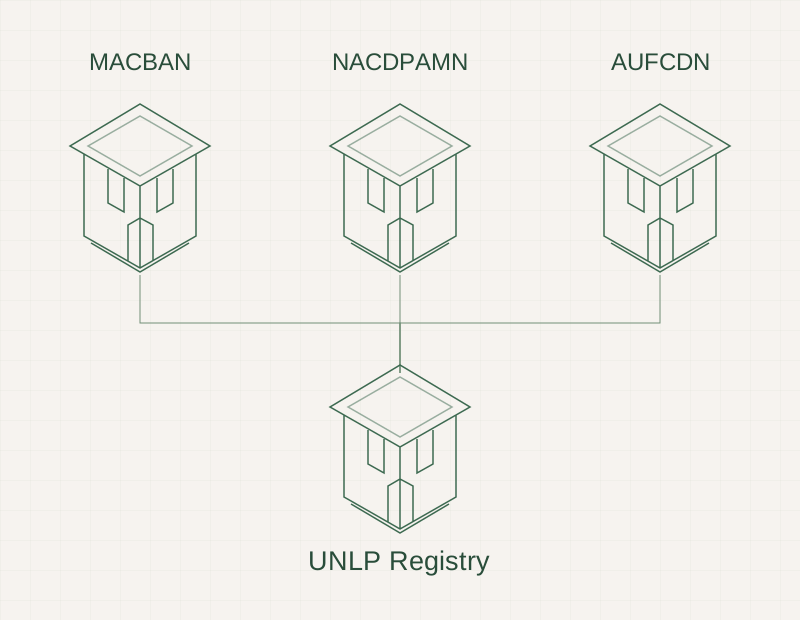
Three associations. A shared foundation. MACBAN, NACDPAMN and AUFCDN retain their own membership relationships and responsibilities. The shared registry structure supports clearer records; it does not make the associations interchangeable.
A member record takes shape. Four parts of a member record come together: identity, membership, a role and supporting records. Information is recorded from association intake.
Recording comes before review. The recorded example moves to an evidence-and-review stage. Evidence recorded is not a verified identity, and completing fields does not automatically confer verification.
One person. Distinct memberships. The membership model allows one person to have distinct association memberships. The illustration shows separate records, not unrestricted sharing or an automatic merge based on a matching name.
A correction with a history. A spelling correction follows an authorised action and a recorded reason. The earlier value stays in the history alongside the updated value; the source record is not silently replaced.
Records support a wider picture. These programme relationships are drawn from the platform design. They are a wider platform concept, not a demonstration of live integrations. The workflows below this illustration demonstrate the current registration, data review and record-history examples.
Clearer records. A foundation for services. The final overview joins the founding associations to the registry foundation and the purpose of organised records. The sequence pauses briefly on this overview before drawing the story again. UNLP’s first national programme, a National Livestock Registry, is structured to populate, integrate with and strengthen the National Livestock Information Management System rather than establish a parallel system of record. This illustration does not depict a live NLIMS connection.
A record
you can carry.
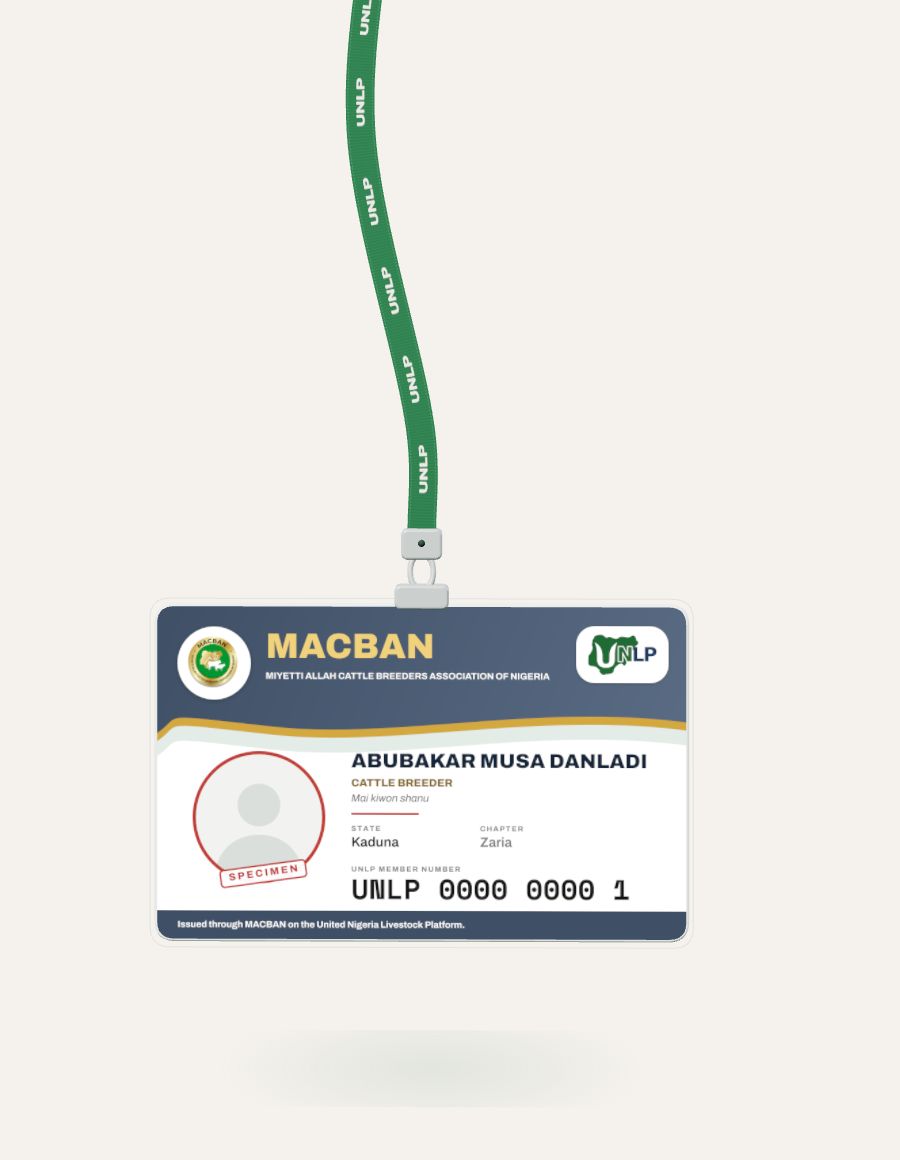
Member cards bring association identity and a shared member reference into one recognisable format.
The association stays visible, with the member reference carried through to the card’s reverse.
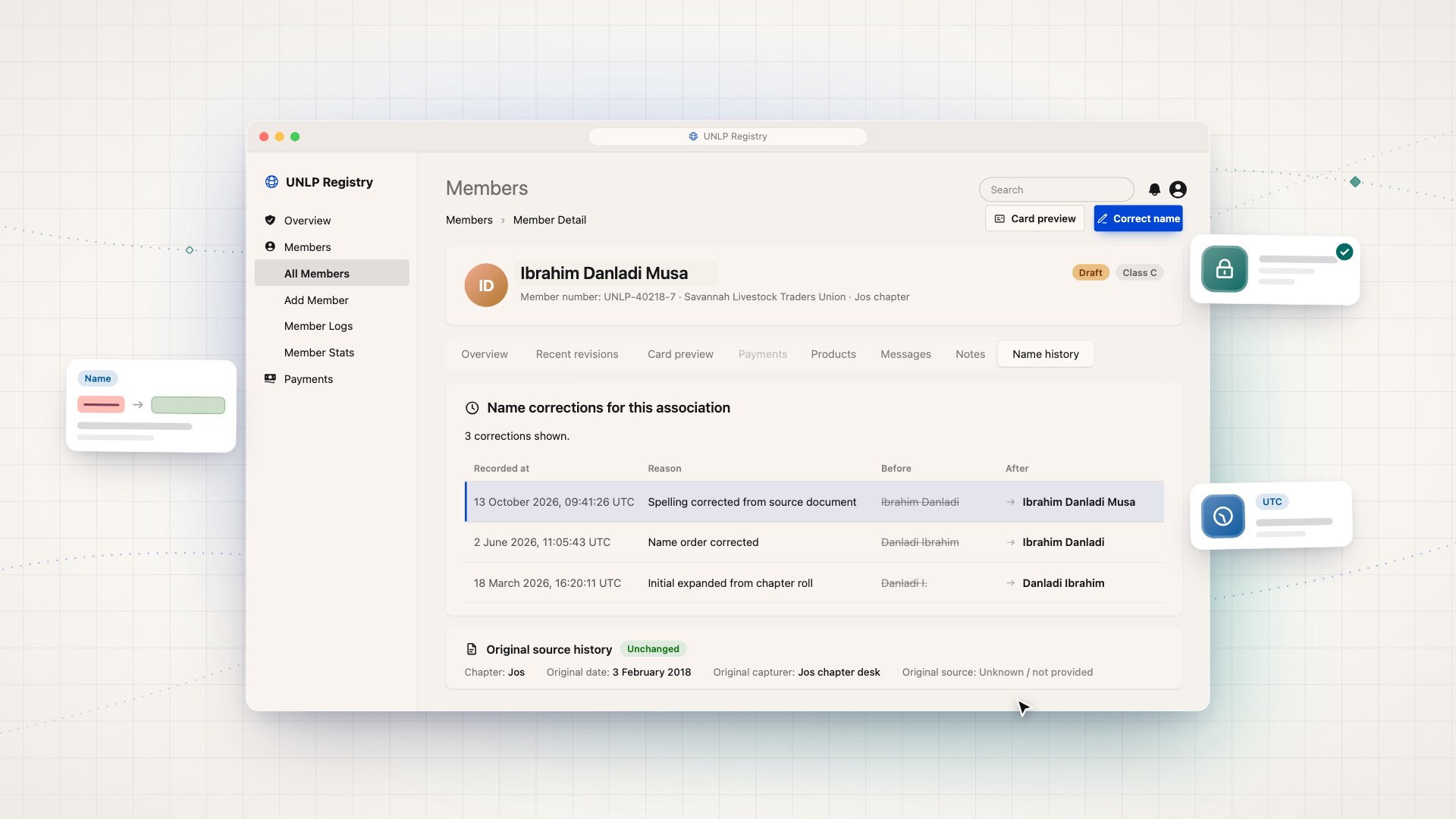
A change,
with context.
An authorised name correction keeps the earlier value, the reason and its timestamp alongside the original source history.
Follow what changed without silently replacing the record it came from.
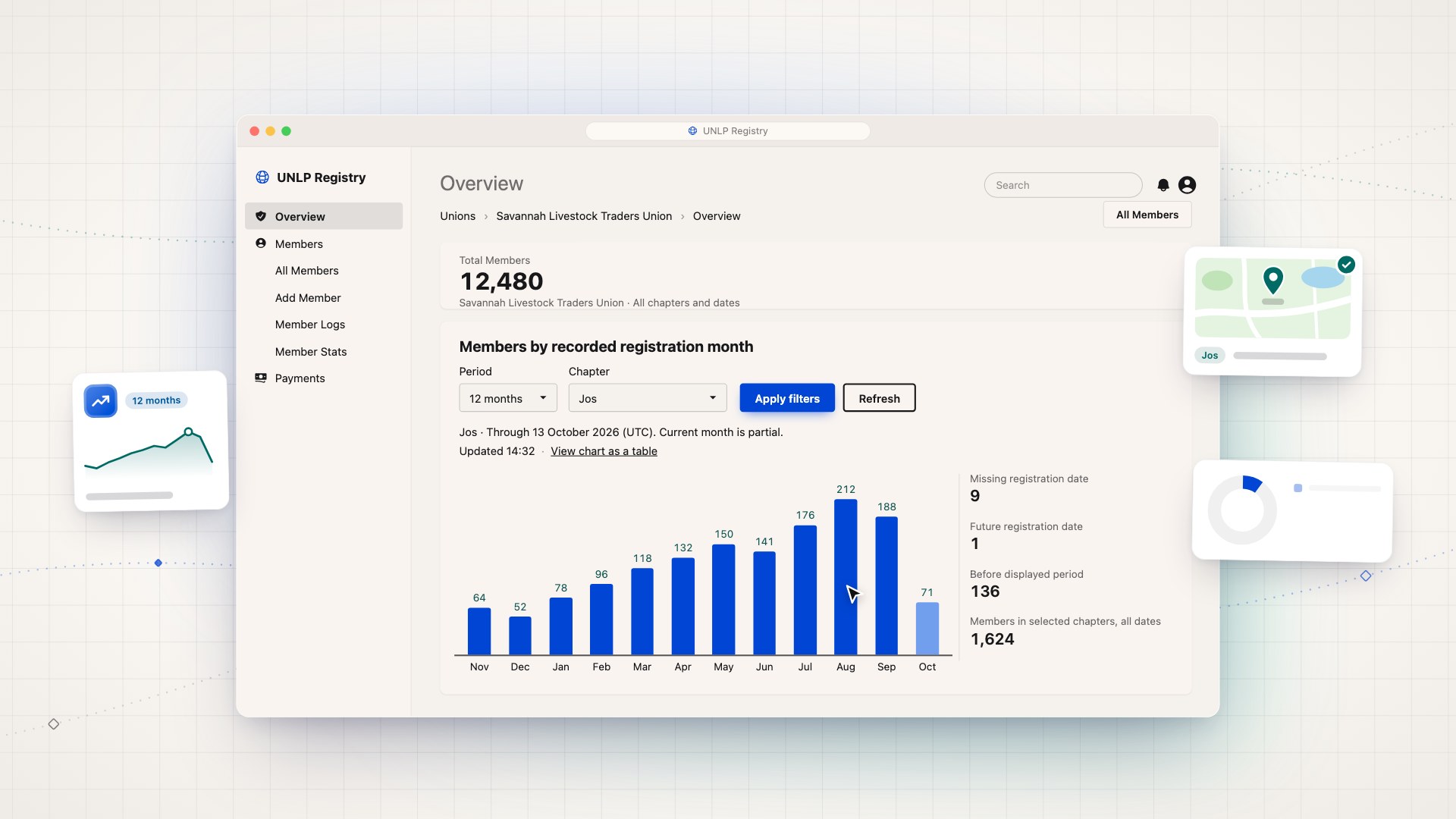
Step back.
See the pattern.
View member totals and registrations by month. Change the period or chapter to focus the picture.
Consistent records help authorised teams understand the information they manage.